
All Blogs/Network
29 Jul 2026
3 min read

How Networking Evolved: The Forces That Shaped It

How Networking Evolved: The Forces That Shaped It

By: Martian Corporation

Introduction 

"Technology evolves by solving yesterday's limitations." 

Modern computer networks didn't appear overnight—they evolved through decades of innovation, experimentation, and problem-solving. As communication demands increased, networking technologies continuously adapted to become faster, more reliable, and easier to manage. 

Many of the design choices we see today, from packet switching to cloud networking, were driven by one goal: creating networks that are scalable, efficient, and universally compatible. Understanding these changes helps explain why modern networking is built the way it is and prepares us for concepts like the OSI Model. 


From Circuit Switching to Packet Switching 

"Efficiency wins when every byte finds its own path." 

Early communication systems relied on circuit switching, where a dedicated connection was established before data could be transmitted. While this worked well for telephone calls, it wasted bandwidth because the connection remained reserved even when no data was being sent. 

The introduction of packet switching changed everything. Instead of reserving a single path, data was divided into small packets that could travel independently through the network and be reassembled at the destination. This approach improved bandwidth utilization, increased reliability, and allowed multiple users to share the same network efficiently. 

Today, packet switching forms the backbone of the Internet. 
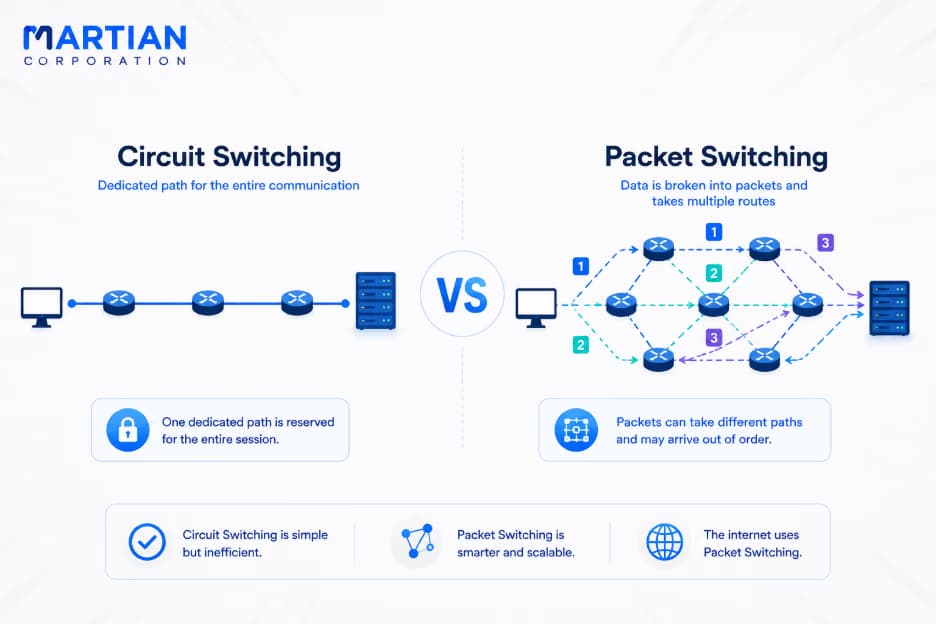
Circuit Switching VS Packet Switching

From Proprietary Systems to Open Standards 

"True connectivity begins with common rules." 

In the early days, many companies developed their own networking technologies that worked only within their own products. These proprietary protocols limited compatibility and made communication between different systems difficult. 

The adoption of open standards, such as TCP/IP, changed this completely. Standardized protocols allowed devices from different manufacturers to communicate seamlessly, accelerating the growth of the Internet and enabling global connectivity. 


From Wired Networks to Wireless Connectivity 

"Freedom begins when connections no longer need cables." 

Traditional networks depended on physical cables, providing reliable communication but limiting mobility. As technology advanced, Wi-Fi and mobile networks removed these restrictions, allowing users to stay connected almost anywhere. 

Today, wireless technologies such as Wi-Fi 6 and 5G support everything from smartphones and laptops to smart homes and IoT devices, making connectivity more flexible than ever before. 

Freedom begins when connections no longer need cables.

From On-Premises Infrastructure to the Cloud 

"Networks evolved from physical hardware to intelligent services." 

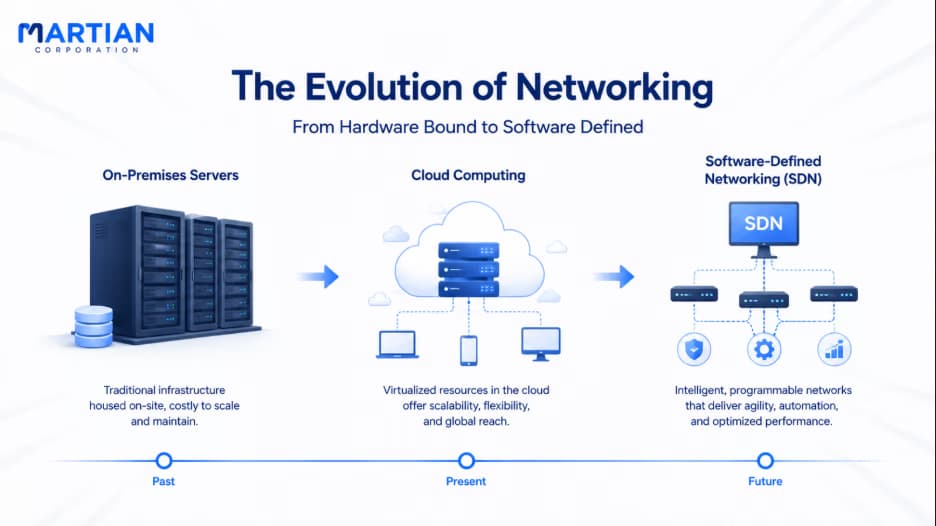
Organizations once managed all their networking equipment inside their own data centers. While effective, this approach required significant investment in hardware, maintenance, and upgrades. 

Cloud computing introduced a new model where networking resources could be deployed, managed, and scaled over the Internet. More recently, Software-Defined Networking (SDN) has separated network management from physical hardware, making networks easier to automate, configure, and optimize. 

The Evolution of Networking

The Power of Abstraction and Layering 

"Complex systems become manageable when each layer has a purpose." 

One recurring theme throughout networking evolution is abstraction. Instead of building one massive system that handles everything, networking divides responsibilities into smaller layers, each performing a specific task. 

This layered approach simplifies development, troubleshooting, interoperability, and future innovation. Engineers can improve one layer without affecting the others, making networks more flexible and easier to maintain. 

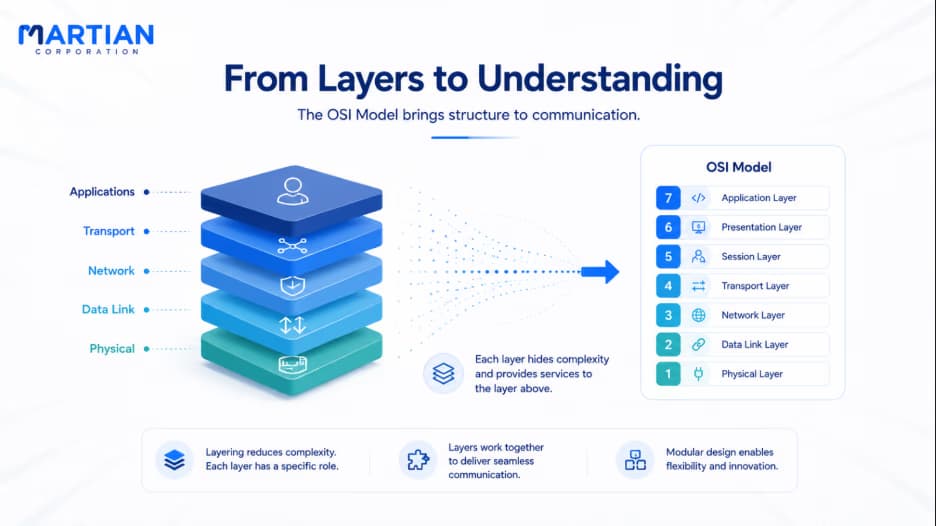
This philosophy eventually led to one of the most important concepts in computer networking—the OSI Model, which organizes communication into seven distinct layers. 

From Layers to Understanding

Conclusion 

"Every breakthrough in networking made communication simpler, faster, and more universal." 

The evolution of networking reflects a continuous effort to overcome limitations. The shift from circuit switching to packet switching, proprietary systems to open standards, wired to wireless communication, and on-premises infrastructure to cloud-based networking has shaped the modern Internet we use every day. 

Underlying all these advancements is the principle of abstraction and layering, which makes complex networks easier to build, manage, and expand. In the next article, we'll explore how this idea is formalized through the OSI Model, the framework that explains how devices communicate across modern networks. 

NewsLetter

Stay ahead in the world of technology

Get curated technology trends, expert analysis, and product updates delivered straight to your inbox — no noise, just signal.

Enter your email address

By subscribing you agree to our Terms and Conditions and Privacy Policy

More Blogs

Switching & VLANsNetwork
28 Aug 2026
6 min read

Switching & VLANs

Modern networks need more than simple connectivity—they need efficient traffic management, logical segmentation, and stronger security. Network switches make this possible by intelligently forwarding data between devices, while VLANs allow organizations to divide a physical network into separate logical networks. This article explores how switching works, how VLANs provide network segmentation, and how these technologies work together to build faster, more organized, and secure network infrastructures.

Read more
Data Link Layer, MAC Addresses & EthernetNetwork
26 Aug 2026
5 min read

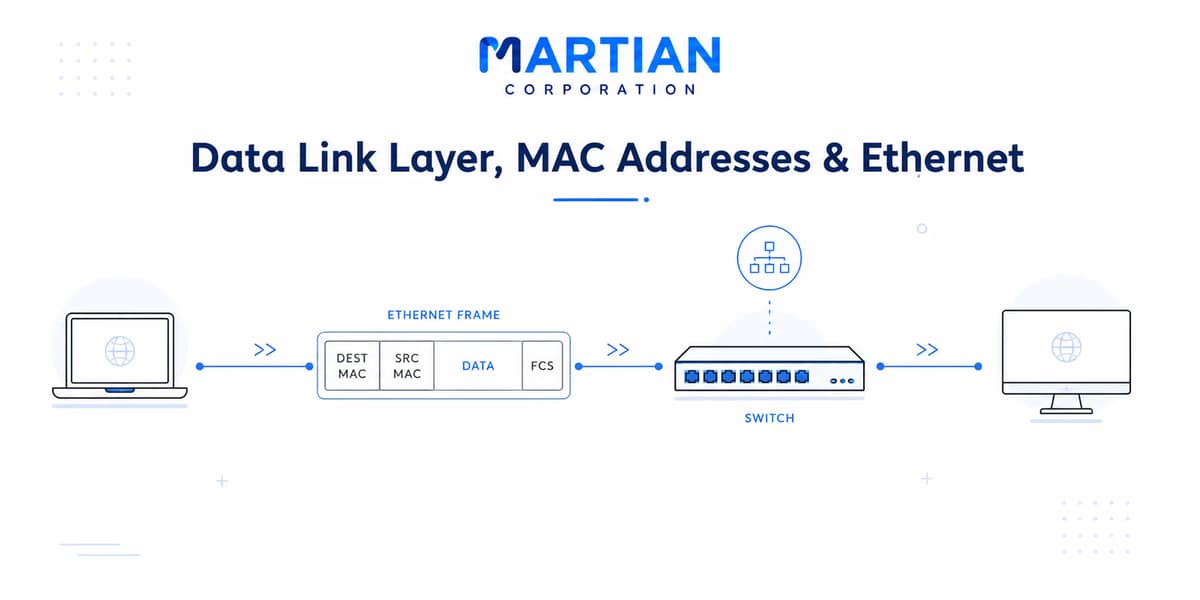
Data Link Layer, MAC Addresses & Ethernet

Before data can travel across the Internet, devices must first communicate reliably within their local networks. The Data Link Layer plays a crucial role in this process by managing device-to-device communication through MAC addresses, Ethernet frames, switches, and error detection mechanisms. This article explores how the Data Link Layer works, how MAC addresses identify devices, and how Ethernet and network switches move frames across a local network—providing the foundation for efficient and reliable network communication.

Read more
The Physical Layer: Cables, Signals & MediaNetwork
21 Aug 2026
5 min read

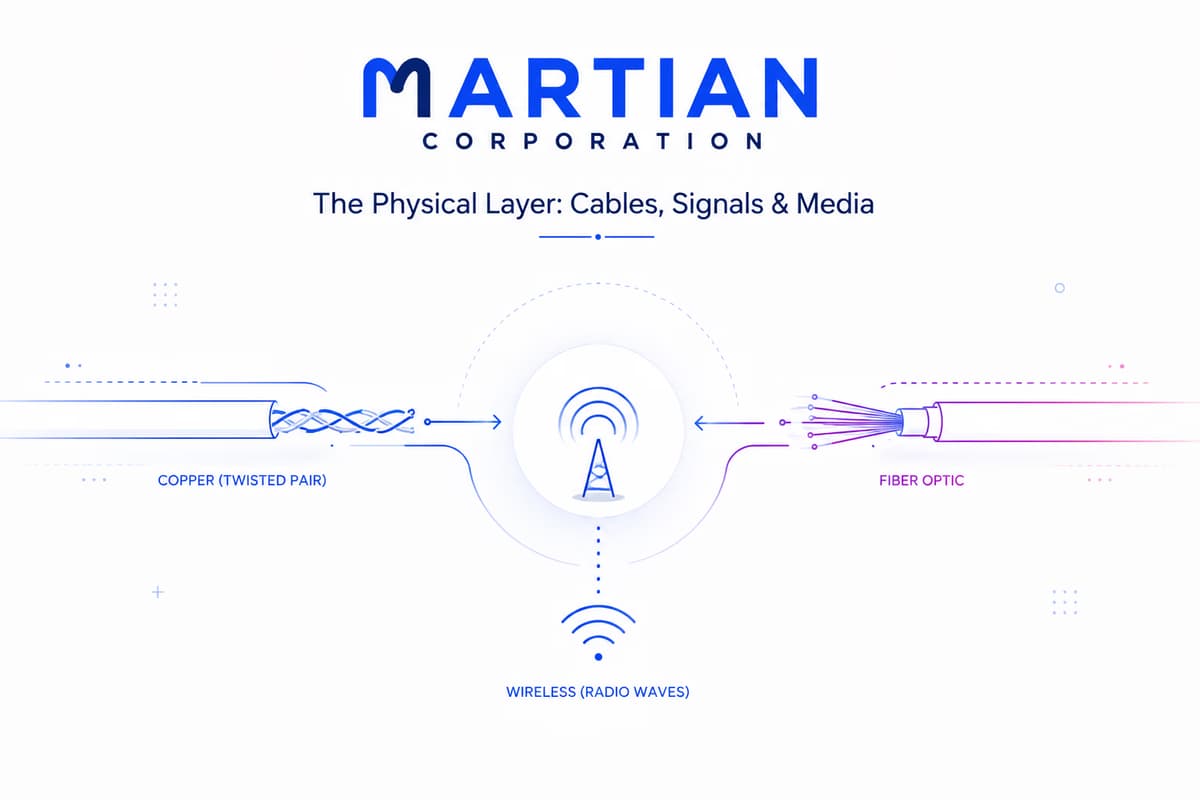
The Physical Layer: Cables, Signals & Media

The Physical Layer: Cables, Signals & Media Every network begins with something physical — electrical signals through copper, pulses of light through fiber, or radio waves through the air. In this article, we take a closer look at the Physical Layer of the OSI Model and understand how data actually travels between devices. We’ll explore copper cables, twisted-pair wiring, fiber optic communication, wireless networks, bandwidth, throughput, latency, signal encoding, connectors, and networking standards — the building blocks that make modern computer networks possible. Because before packets can be routed, addressed, or delivered, they first need a physical medium to travel through.

Read more