
Our Blogs

The latest news, updates and stories brought to you by Martian.

Latest Blogs

Switching & VLANsNetwork
28 Aug 2026
6 min read

Switching & VLANs

Modern networks need more than simple connectivity—they need efficient traffic management, logical segmentation, and stronger security. Network switches make this possible by intelligently forwarding data between devices, while VLANs allow organizations to divide a physical network into separate logical networks. This article explores how switching works, how VLANs provide network segmentation, and how these technologies work together to build faster, more organized, and secure network infrastructures.

Read more
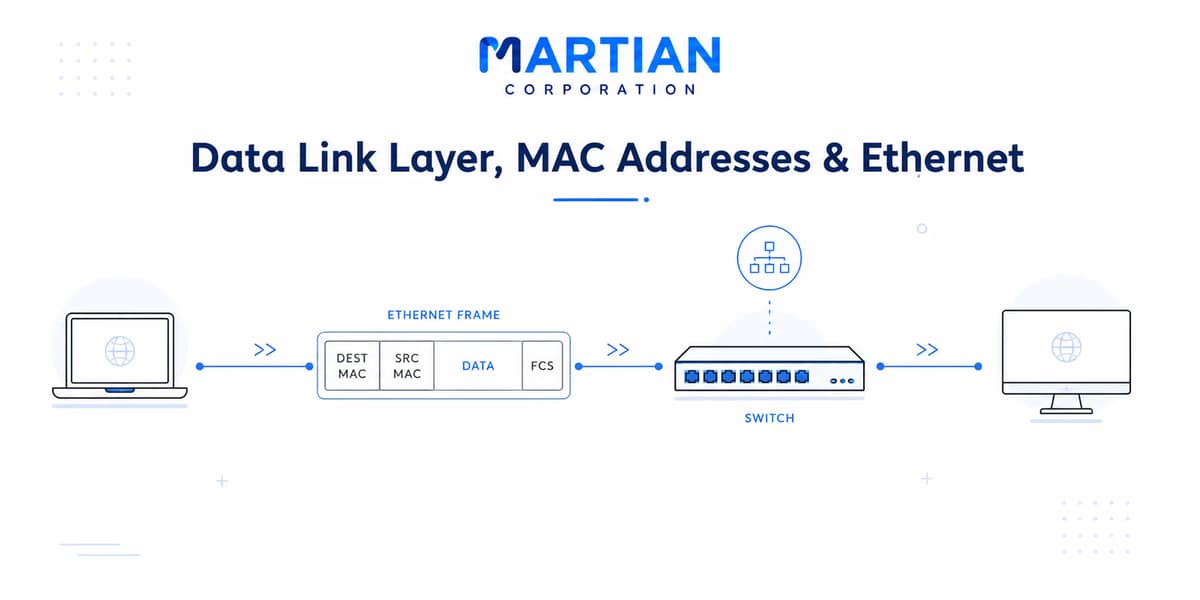
Data Link Layer, MAC Addresses & EthernetNetwork
26 Aug 2026
5 min read

Data Link Layer, MAC Addresses & Ethernet

Before data can travel across the Internet, devices must first communicate reliably within their local networks. The Data Link Layer plays a crucial role in this process by managing device-to-device communication through MAC addresses, Ethernet frames, switches, and error detection mechanisms. This article explores how the Data Link Layer works, how MAC addresses identify devices, and how Ethernet and network switches move frames across a local network—providing the foundation for efficient and reliable network communication.

Read more
The Physical Layer: Cables, Signals & MediaNetwork
21 Aug 2026
5 min read

The Physical Layer: Cables, Signals & Media

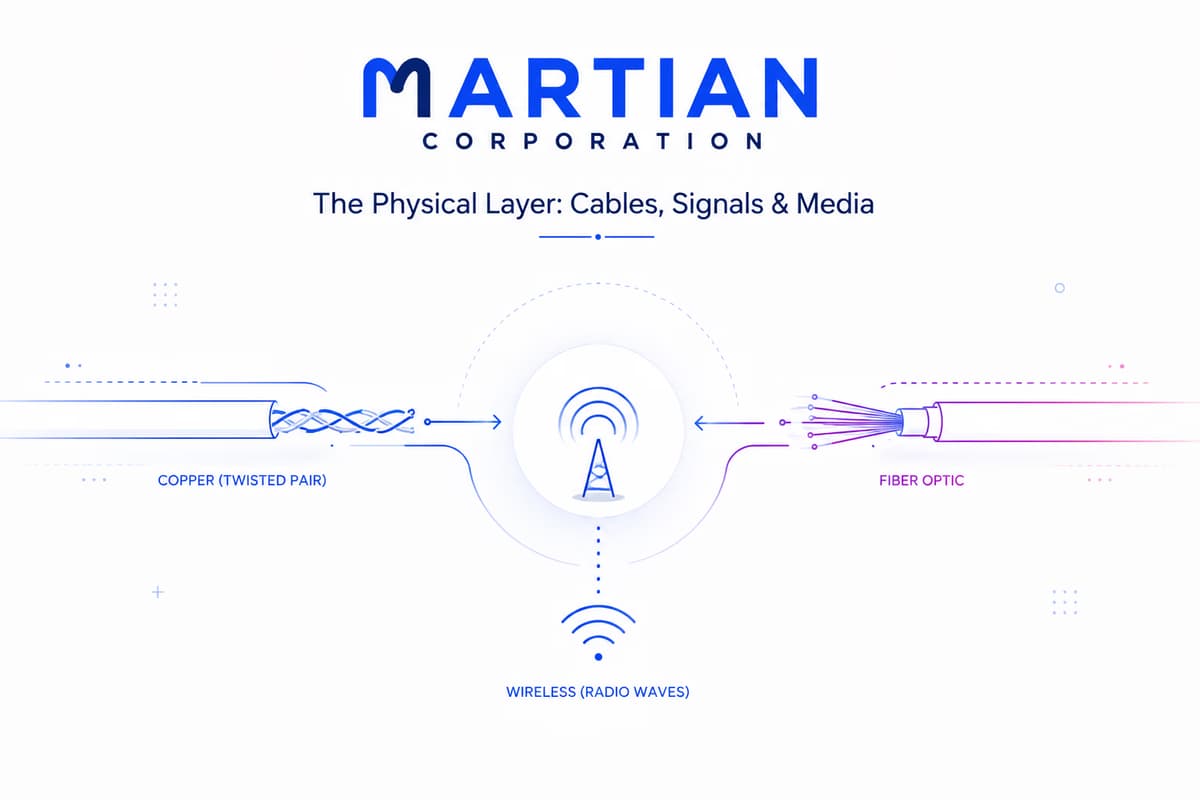
The Physical Layer: Cables, Signals & Media Every network begins with something physical — electrical signals through copper, pulses of light through fiber, or radio waves through the air. In this article, we take a closer look at the Physical Layer of the OSI Model and understand how data actually travels between devices. We’ll explore copper cables, twisted-pair wiring, fiber optic communication, wireless networks, bandwidth, throughput, latency, signal encoding, connectors, and networking standards — the building blocks that make modern computer networks possible. Because before packets can be routed, addressed, or delivered, they first need a physical medium to travel through.

Read more
How Data Actually Travels: A Packet's JourneyNetwork
19 Aug 2026
5 min read

How Data Actually Travels: A Packet's Journey

Every time we send a message, open a website, stream a video, or download a file, enormous amounts of data travel across complex networks in the form of tiny packets. But how does this data actually reach its destination? This article explores the journey of a data packet—from being broken down at the source to being addressed, routed, transmitted, and reassembled at its destination. Understanding this process provides a clearer picture of how the Internet moves information across interconnected networks, often in just milliseconds.

Read more
TCP/IP Model: The One the Internet Actually UsesNetwork
14 Aug 2026
4 min read

TCP/IP Model: The One the Internet Actually Uses

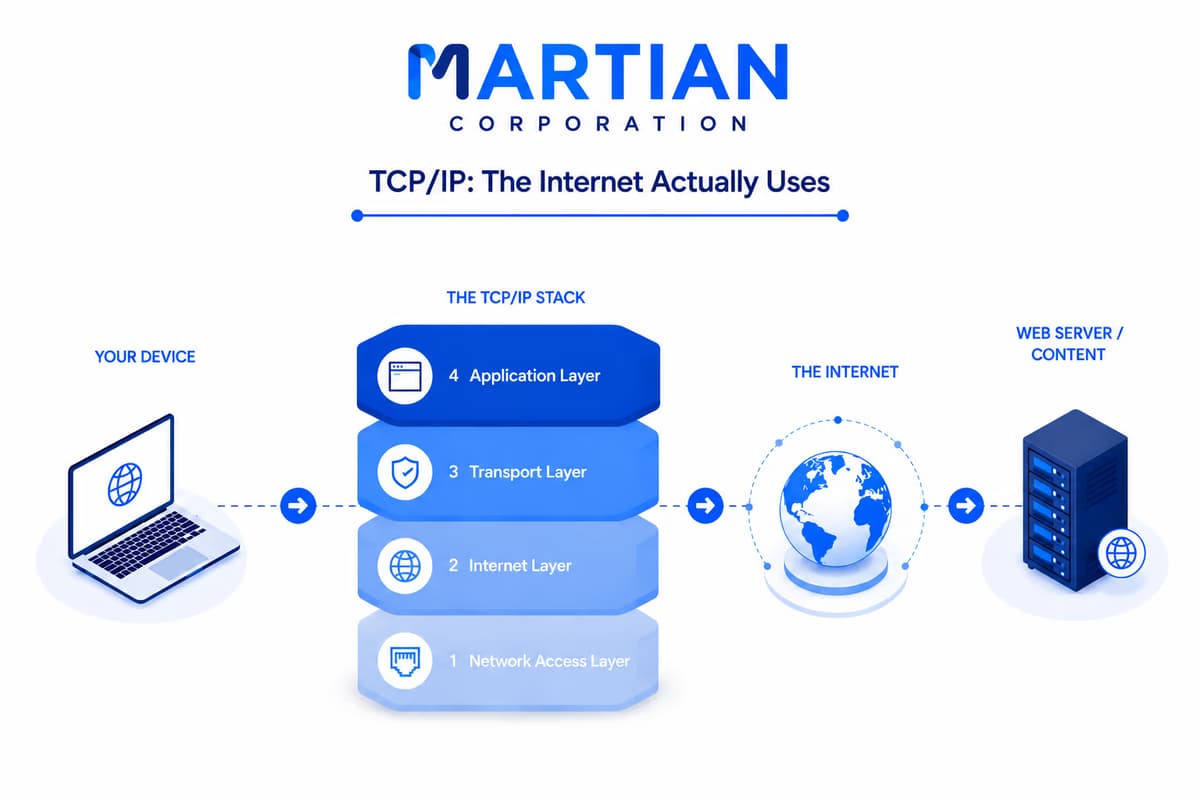
The Internet may seem seamless, but behind every website, message, and online service is a powerful framework that makes global communication possible. The TCP/IP model provides the foundation for how devices connect, exchange data, and communicate across different networks. This article explores the four layers of the TCP/IP model, their individual roles, and how they work together to deliver information reliably from one device to another. Understanding TCP/IP offers a clearer view of the technology that quietly powers the modern Internet and our increasingly connected digital world.

Read more
image-1Network
12 Aug 2026
5 min read

The OSI Model: The Map of Everything

Every time you open a website, send a message, or access a server, multiple networking processes work together behind the scenes. The OSI Model makes this complex journey easier to understand by breaking network communication into seven distinct layers. In this article, explore the 7 OSI layers, encapsulation and decapsulation, TCP/IP vs. OSI, and how the model helps troubleshoot real-world network problems. A simple map to understand how data moves from one device to another—and where things can go wrong.

Read more
featured imageNetwork
7 Aug 2026
3 min read

Network Topologies & Architecture: How the Shape of a Network Defines Its Strength

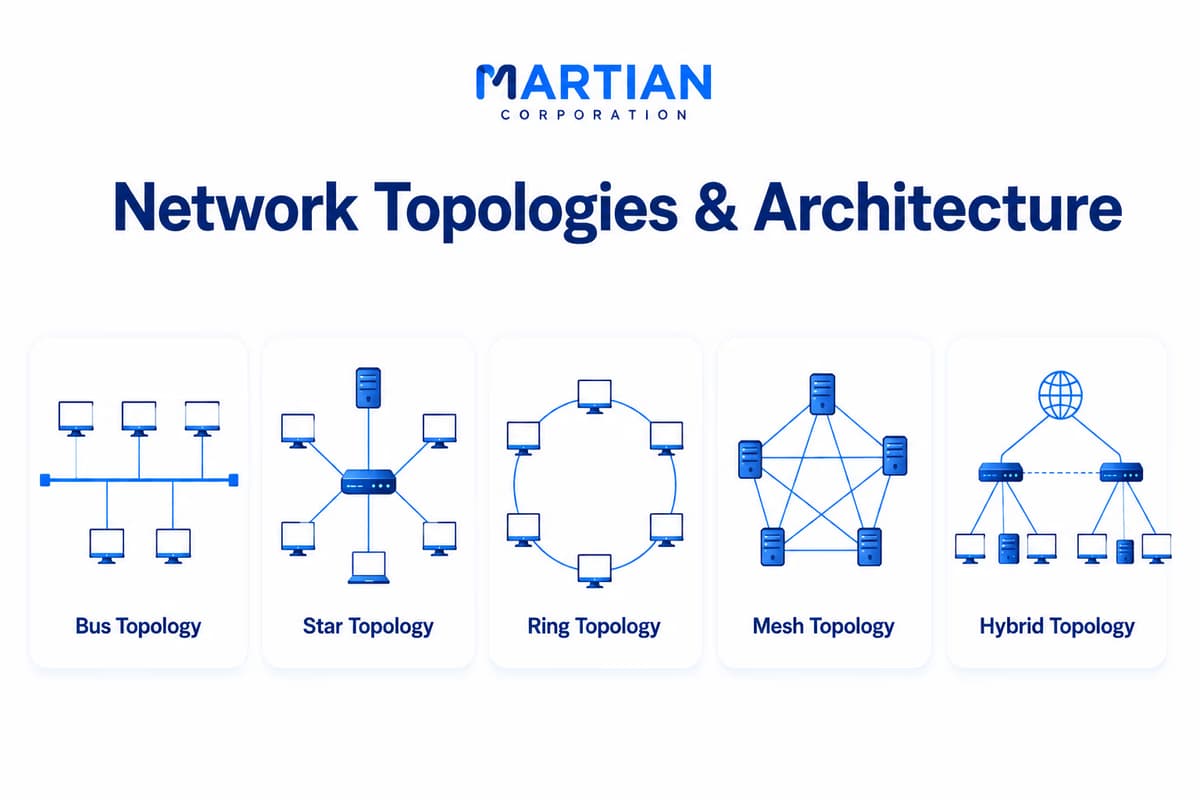
Every network begins with a design. The way devices are connected—known as network topology—determines how efficiently data flows, how resilient the network is to failures, and how easily it can scale as demands grow. In this article, we'll explore the most common network topologies—Bus, Star, Ring, Mesh, and Hybrid—understand the difference between physical and logical topology, and discover how modern enterprises use three-tier campus networks and spine-leaf architecture to build fast, reliable, and scalable infrastructure. Whether you're learning Computer Networks, preparing for CCNA, or exploring network architecture and system design, this guide connects the fundamentals with real-world implementations.

Read more
Types of Networks: LAN, WAN, MAN, PAN & BeyondNetwork
5 Aug 2026
3 min read

Types of Networks: LAN, WAN, MAN, PAN & Beyond

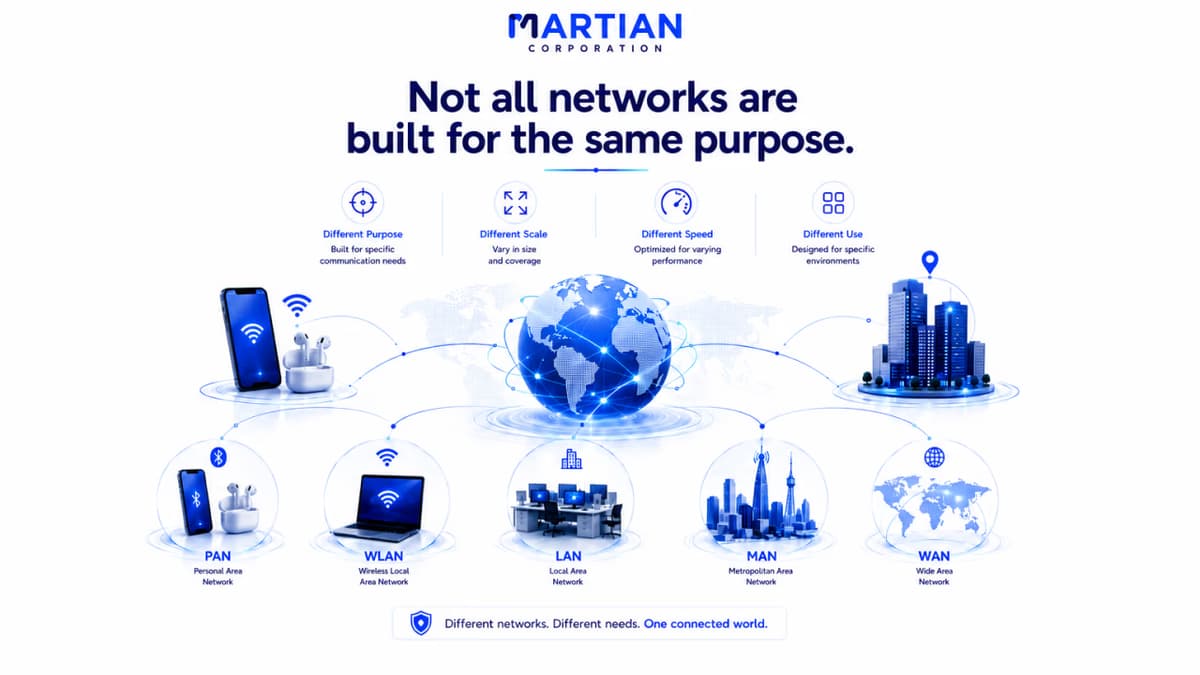
Computer networks come in many forms, each designed to meet specific communication and connectivity needs. From Personal Area Networks (PAN) and Local Area Networks (LAN) to Metropolitan Area Networks (MAN), Wide Area Networks (WAN), and beyond, every network type plays a unique role in enabling seamless data exchange. This article explores the characteristics, applications, advantages, and real-world use cases of different network types, providing a clear understanding of how they collectively power our connected digital ecosystem.

Read more
Why Networking Matters Today: Use Cases & Business ImpactNetwork
1 Aug 2026
3 min read

Why Networking Matters Today: Use Cases & Business Impact

Computer networking has become the foundation of the modern digital economy, connecting people, devices, and businesses like never before. From enabling cloud computing and remote collaboration to supporting cybersecurity, IoT, and enterprise operations, networks play a critical role in driving innovation and efficiency. This article explores why networking is more important than ever, highlighting its practical use cases, business impact, and the essential role it plays in powering today's interconnected world.

Read more

NewsLetter

Stay ahead in the world of technology

Get curated technology trends, expert analysis, and product updates delivered straight to your inbox — no noise, just signal.

Enter your email address

By subscribing you agree to our Terms and Conditions and Privacy Policy