All Blogs/Network
1 Aug 2026
3 min read

Why Networking Matters Today: Use Cases & Business Impact

Why Networking Matters Today: Use Cases & Business Impact

By: Martian Corporation

Introduction

"In today's world, every digital experience begins with a network." 

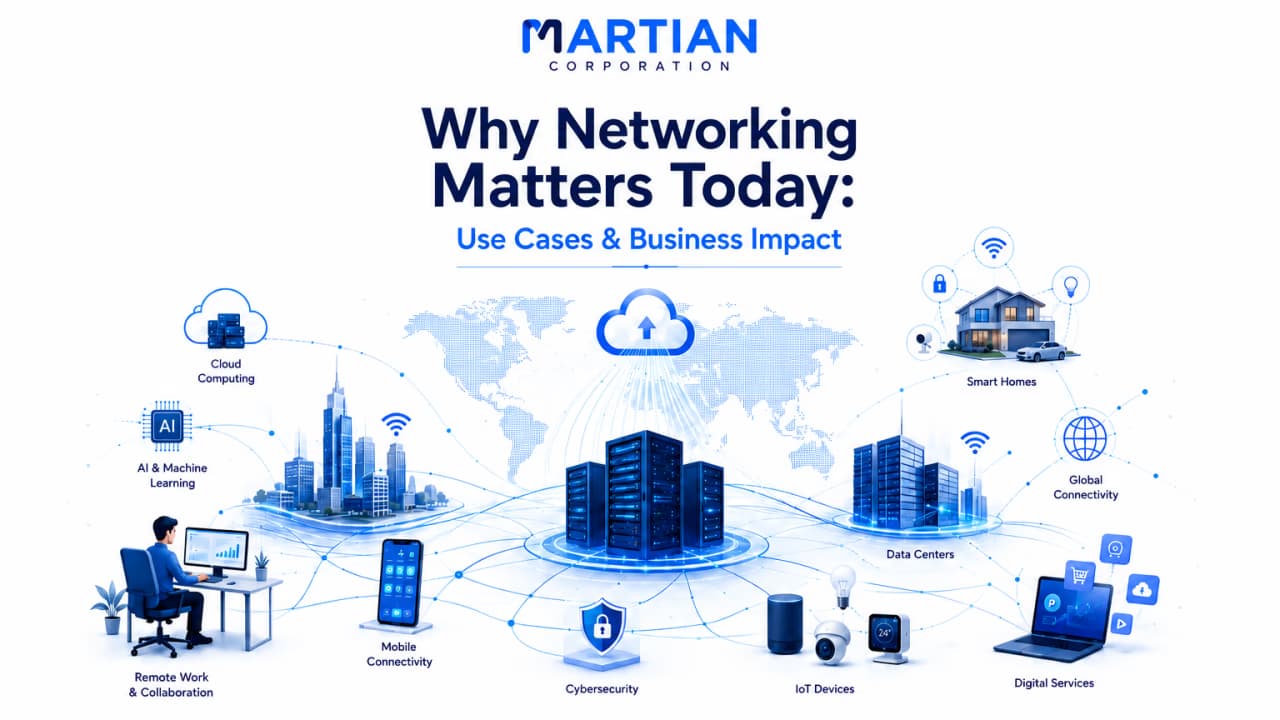
Whether you're streaming a movie, making an online payment, attending a virtual meeting, or using a smart home device, networking makes it all possible. It has evolved from simply connecting computers to becoming the backbone of the global digital economy. 

Today, networking is not just an IT concern—it's a strategic business asset. Organisations rely on robust networks to improve productivity, enhance customer experiences, and stay competitive in an increasingly connected world. 

Networking Powers Everyday Digital Experiences 

"Behind every click is a network making it happen." 

Most of our daily digital activities depend on reliable networking. Streaming platforms deliver high-quality content in real time, cloud applications allow us to access files from anywhere, and remote collaboration tools keep teams connected across the globe. 

The rise of the Internet of Things (IoT) has further expanded networking by connecting smart homes, wearable devices, industrial sensors, and autonomous systems, enabling seamless communication between billions of devices. 
Transforming Industries Through Connectivity

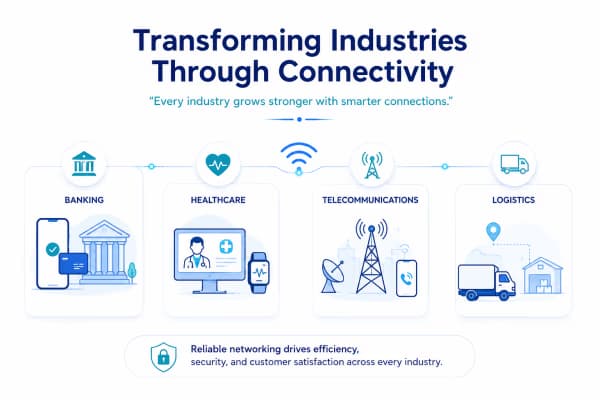
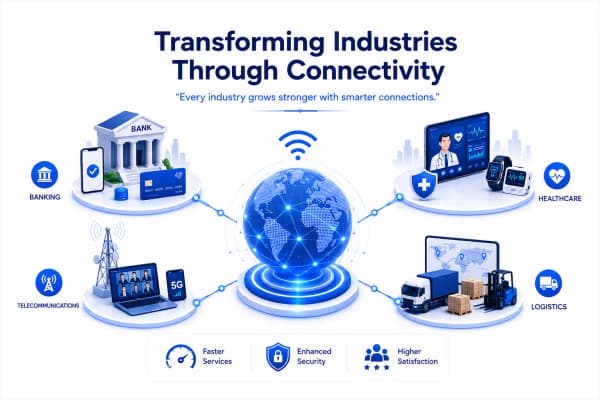
Transforming Industries Through Connectivity 

"Every industry grows stronger with smarter connections." 

Networking has become the foundation of digital transformation across industries. 

  • Banking enables secure online transactions and digital payments.  
  • Healthcare supports telemedicine, electronic health records, and connected medical devices.  
  • Telecommunications deliver voice, video, and internet services to millions of users.  
  • Logistics relies on real-time tracking, GPS, and supply chain management to improve operational efficiency.  

Reliable networking allows organisations to deliver faster services while improving security and customer satisfaction. 

Transforming Industries Through Connectivity

Driving Business Growth and Innovation 

"A strong network creates stronger businesses." 

Modern businesses depend on networking to support collaboration, cloud adoption, and data-driven decision-making. Employees can work remotely, access shared resources securely, and collaborate in real time regardless of location. 

Effective networking also helps organisations reduce operational costs, improve scalability, and launch new digital services more quickly. As businesses continue adopting AI, big data, and cloud technologies, network performance becomes a key driver of innovation. 

Resilience: A Business Priority 

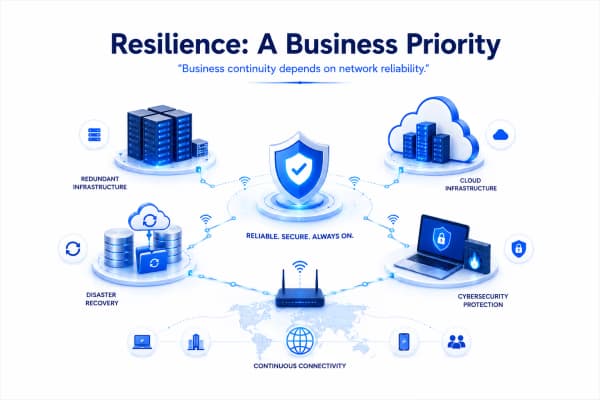
"Business continuity depends on network reliability." 

Network outages can disrupt operations, impact customer trust, and result in significant financial losses. As a result, business leaders now view network resilience as a strategic priority rather than just a technical requirement. 

Modern organisations invest in redundancy, cyber-security, disaster recovery, and cloud-based infrastructure to ensure their networks remain secure and available even during unexpected disruptions. 

Resilience: A Business Priority

Networking Will Continue to Shape the Future 

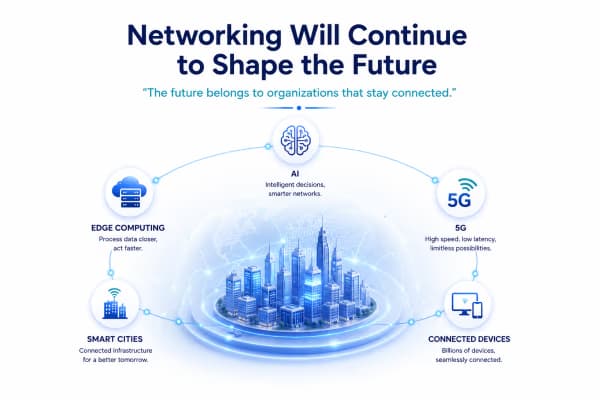
"The future belongs to organisations that stay connected." 

Emerging technologies such as Artificial Intelligence, Edge Computing, 5G, and Smart Cities will further increase the importance of networking. As businesses become more data-driven and digitally connected, networks will serve as the foundation for innovation, automation, and global collaboration. 

Organisations that invest in modern, scalable, and secure networking will be better positioned to adapt to future technological advancements. 

Networking Will Continue to Shape the Future

Conclusion 

"Networking is no longer just infrastructure—it's a competitive advantage." 

From enabling everyday digital experiences to driving business growth and industry transformation, networking has become an essential part of modern life. It powers communication, supports innovation, and ensures organisations can operate efficiently in a connected world. 

As technology continues to evolve, businesses that build resilient and intelligent networks will not only stay competitive but also unlock new opportunities for growth and digital transformation. 

NewsLetter

Stay ahead in the world of technology

Get curated technology trends, expert analysis, and product updates delivered straight to your inbox — no noise, just signal.

Enter your email address

By subscribing you agree to our Terms and Conditions and Privacy Policy

More Blogs

Switching & VLANsNetwork
28 Aug 2026
6 min read

Switching & VLANs

Modern networks need more than simple connectivity—they need efficient traffic management, logical segmentation, and stronger security. Network switches make this possible by intelligently forwarding data between devices, while VLANs allow organizations to divide a physical network into separate logical networks. This article explores how switching works, how VLANs provide network segmentation, and how these technologies work together to build faster, more organized, and secure network infrastructures.

Read more
Data Link Layer, MAC Addresses & EthernetNetwork
26 Aug 2026
5 min read

Data Link Layer, MAC Addresses & Ethernet

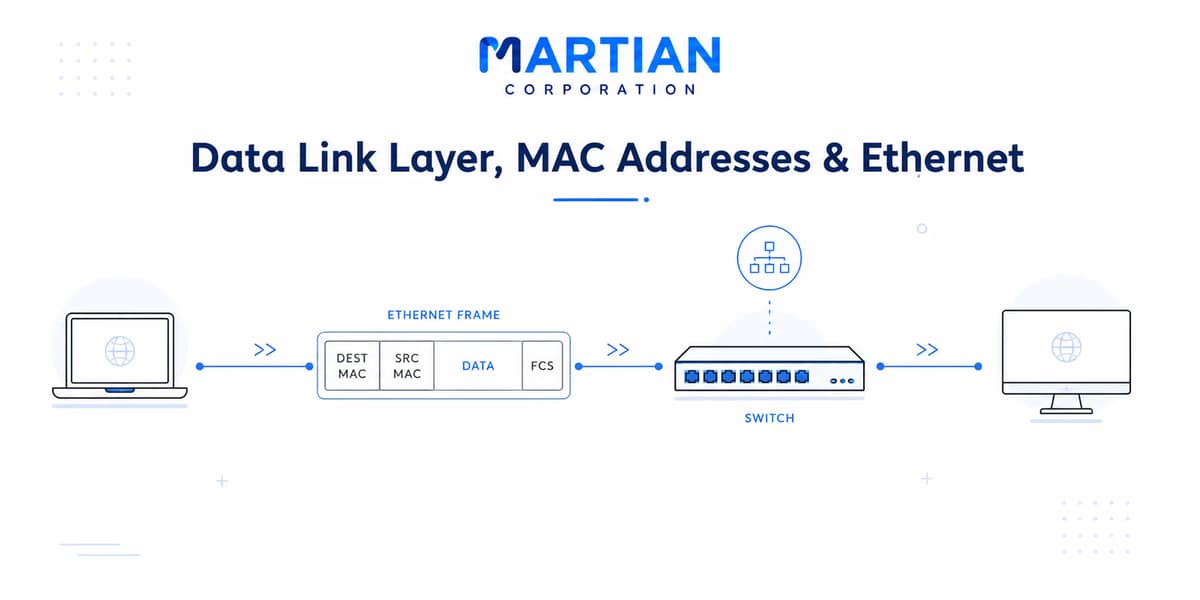
Before data can travel across the Internet, devices must first communicate reliably within their local networks. The Data Link Layer plays a crucial role in this process by managing device-to-device communication through MAC addresses, Ethernet frames, switches, and error detection mechanisms. This article explores how the Data Link Layer works, how MAC addresses identify devices, and how Ethernet and network switches move frames across a local network—providing the foundation for efficient and reliable network communication.

Read more
The Physical Layer: Cables, Signals & MediaNetwork
21 Aug 2026
5 min read

The Physical Layer: Cables, Signals & Media

The Physical Layer: Cables, Signals & Media Every network begins with something physical — electrical signals through copper, pulses of light through fiber, or radio waves through the air. In this article, we take a closer look at the Physical Layer of the OSI Model and understand how data actually travels between devices. We’ll explore copper cables, twisted-pair wiring, fiber optic communication, wireless networks, bandwidth, throughput, latency, signal encoding, connectors, and networking standards — the building blocks that make modern computer networks possible. Because before packets can be routed, addressed, or delivered, they first need a physical medium to travel through.

Read more